There is a quiet power in doing something again and again.
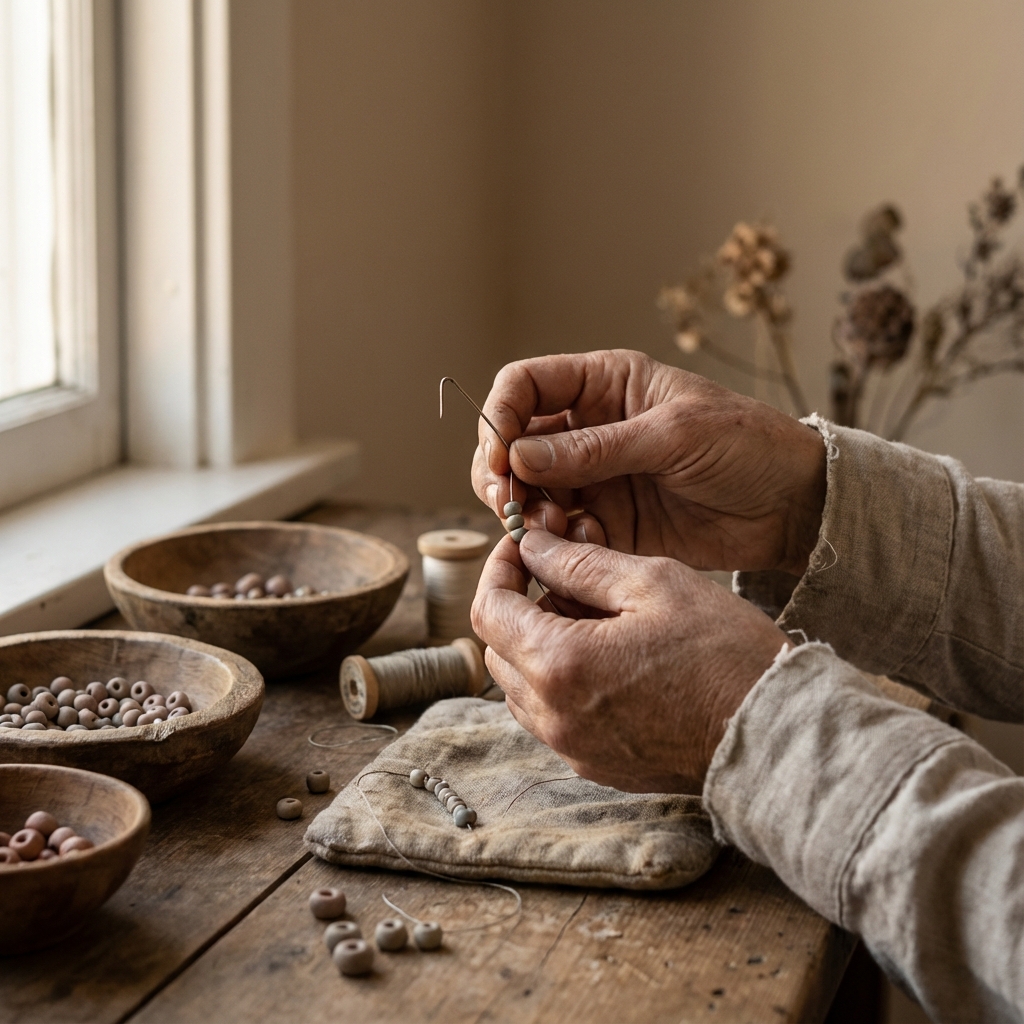
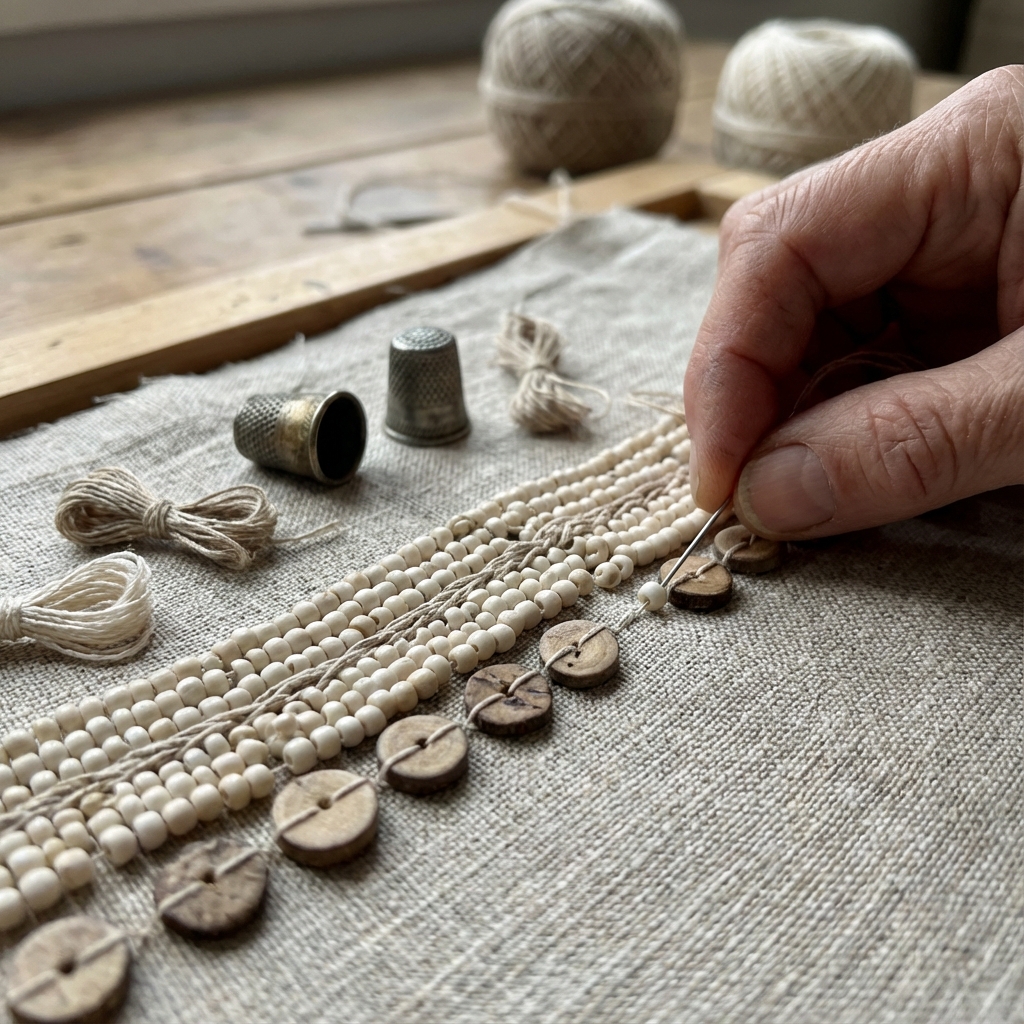
In beadwork and painting, repetition is not a shortcut or a means to efficiency—it is the work itself. Each stitch, each mark, returns to the same motion, the same gesture, building meaning through accumulation. Over time, repetition becomes ritual: a steady rhythm that grounds the body and focuses the mind.
Ritual begins with intention.
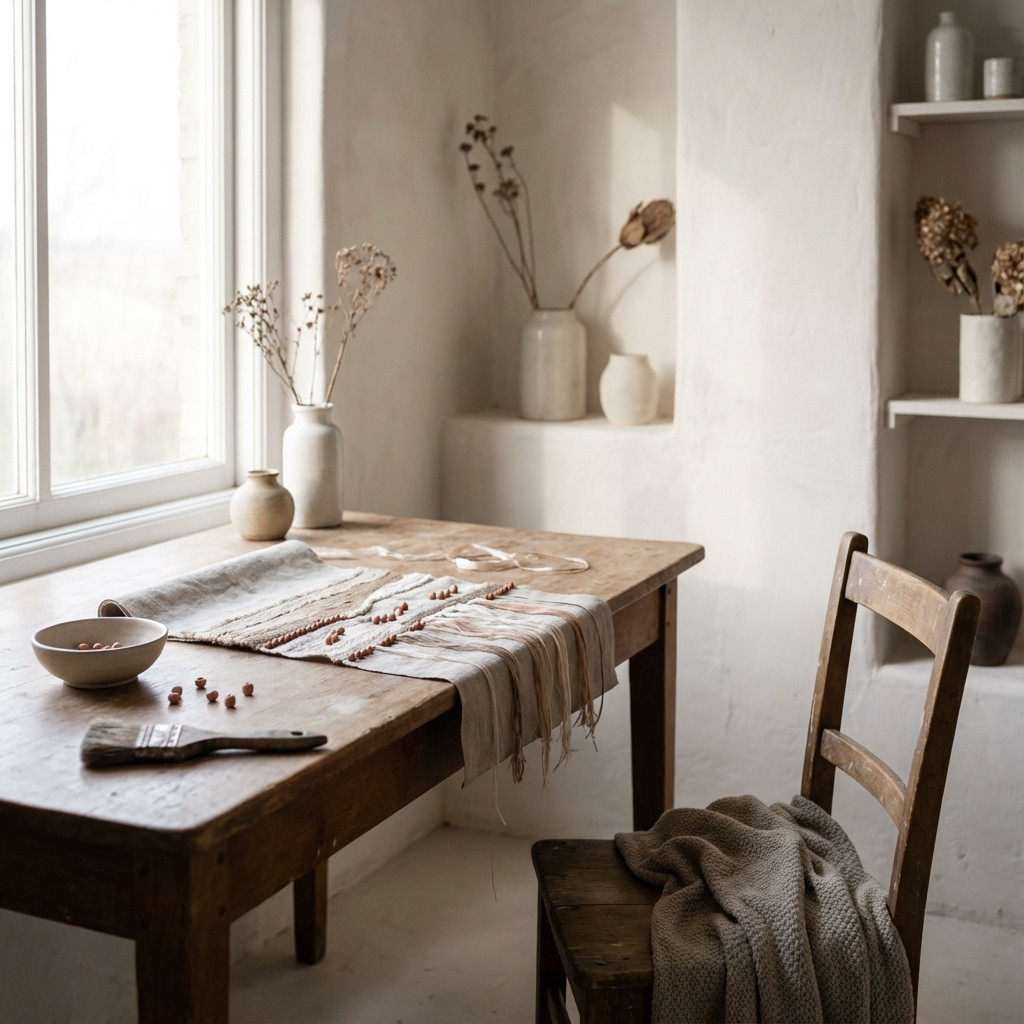
Materials are prepared carefully. The workspace is arranged with attention. The same movements repeat, not mechanically, but mindfully—each one slightly different from the last. These subtle variations matter. They record time passing. They mark presence. They remind us that the handmade carries the imprint of the human hand, not as flaw, but as truth.
In a culture that prizes speed and uniformity, repetition can be misunderstood. It is often mistaken for sameness. But repetition in craft deepens rather than flattens. It allows for listening. It creates space for intuition to surface. The hands learn the work at a pace the mind cannot rush.
There is humility in this process.
The work unfolds slowly, sometimes imperceptibly. Progress is measured not in leaps, but in layers. Patience becomes a form of care—care for the materials, for the process, and for the time required to let something meaningful emerge. Craftsmanship lives here, in the willingness to stay with the work long enough for it to reveal itself.
Imperfection is inevitable, and welcomed.
A bead slightly off alignment. A brushstroke that reveals its path. These moments are not corrected away; they are honored as evidence of making. They remind us that the handmade resists perfection in favor of presence. What remains is not sameness, but character—formed through repetition, held together by intention.
For the viewer, this labor is felt even if it is not fully seen. The density of marks, the quiet rhythm embedded in the surface, the sense of time held within the piece—all speak to the care invested in its making. The work asks to be encountered slowly, mirroring the way it was created.
Craftsmanship, practiced as ritual, becomes a form of devotion.
It is a commitment to patience, to attention, and to the belief that beauty unfolds not through urgency, but through care repeated over time.